SIMPLY AUTOMATED UMC-DB9-W Upb Interface Module
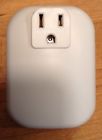
( Brand: Simply Automated ), ( Manufacturer Part Number: UMC-DB9-W ), ( Type: Plug-in Socket Controller ), ( Connected Home Protocol: Powerline/upb )
Review SIMPLY AUTOMATED Upb Computer Interface Module Db9
The UMC-DB9-W Automated UPB Interface Module DB9, manufactured by UMC, is a versatile and innovative device designed to seamlessly integrate various home automation systems. This module, specifically, is a DB9 version, making it compatible with devices that use DB9 connectors.
The UMC-DB9-W is an upgraded version of its predecessors, boasting enhanced performance and functionality. It supports UPB (Universal Powerline Bus) protocol, allowing it to communicate and control various home automation devices over power lines. This feature eliminates the need for additional wiring, making installation a breeze and maintaining a clean, clutter-free environment.
The module measures 3.54 inches in length, 1.38 inches in width, and 0.51 inches in height, making it compact and easy to fit into tight spaces. It features a robust, metal housing, ensuring durability and reliability in various environmental conditions.
The UMC-DB9-W offers 12 I/O points, each capable of handling different types of signals. These points can be used to control various devices, such as lights, fans, thermostats, and security systems, among others. The module also supports high-speed data transmission, ensuring real-time control and monitoring of your home automation system.
One of the standout features of the UMC-DB9-W is its compatibility with popular home automation software, such as HomeSeer, Control4, and Crestron. This means you can easily integrate it with your existing home automation setup, enabling you to manage your entire system from a single interface.
In conclusion, the UMC-DB9-W Automated UPB Interface Module DB9 is a must-have device for anyone looking to automate their home. Its compact size, robust construction, and wide range of compatibility make it an excellent choice for both DIY home automation enthusiasts and professional installers. With its 12 I/O points and high-speed data transmission, it provides reliable and efficient control over various home automation devices, ensuring a smart and convenient living experience.
Pros of buying UMC-DB9-W (Automated UPB Interface Module DB9 UMC-DB9):1. Compatibility: The UMC-DB9-W is designed to work with UPB (Universal Powerline Bus) systems, which are widely used in home automation projects.
2. Ease of Installation: The module is plug-and-play, requiring no additional wiring or complicated setup processes. It simply connects to the UPB bus and your device.
3. Expandability: The UMC-DB9-W allows you to connect multiple devices to the UPB bus, expanding your home automation capabilities without the need for additional hubs or gateways.
4. Durability: The module is designed for long-term use and is built to withstand normal home conditions.
Cons of buying UMC-DB9-W:1. Limited Compatibility: The UMC-DB9-W is specifically designed for UPB systems, so it may not work with other home automation systems.
2. Upfront Cost: While the UMC-DB9-W is an affordable option for expanding your UPB system, the initial cost of purchasing a module and any necessary devices can add up.
3. Limited Control Options: The UMC-DB9-W is primarily used for connecting devices to the UPB bus, and it does not provide additional control options or features beyond what is offered by the UPB system.
Conclusion:The UMC-DB9-W is a great option for expanding your UPB home automation system, offering easy installation, expandability, and durability. However, its limited compatibility and control options may make it less suitable for those with other home automation systems or more advanced control requirements. If you are looking to expand your UPB system, the UMC-DB9-W is a worthwhile investment. If you are looking for a more versatile option that can work with multiple systems, you may want to consider other options.
Recommendation:If you are already using UPB in your home automation system and looking to expand your capabilities, the UMC-DB9-W is a great option. It is easy to install, expandable, and reasonably priced. However, if you are looking for a more versatile option that can work with multiple systems, you may want to consider other options that offer more control features and compatibility with a wider range of devices.
Details:
The serial or USB port of computer controller is connected to module using standard cable provided. The umc-USB is not recommended for connection of home automation controllers. First is the scheduler-timer model Cs-01 with computer interface module Com mode. The UMC-DB9 can also be used to configure any upb devices.
It provides all of the functionality UMC-DB9 plus will control scheduled events and links for up to 250 upb devices. Installation of the umc is simple: module plugged into a standard 120vac outlet. The schedule is easy to use and has an impressive list of features including celestial clock vacation mode, so it can control outdoor indoor lighting while you are at home or away. It provides all the functionality of UMC-DB9 plus a programming display providing 80 upstart configuration software capability without use PC.
The umc series are plug-in modules designed to convert serial rs-232 signals into highly-reliable, universal powerline bus upb. The umc-USB-w is ideal for an installer configuring any upb devices with a laptop personal computer PC using upstart software since it plugs into popular USB port. They provide a bridge between the PC controller to power line via modules plug-in ac connection.
Second is the pocket programmer model pup-20 with Com. This enables computer-based configuration and control use UMC-DB9 for of lighting scenes, switches, modules other upb devices, over the power line. Two alternatives are available to the UMC-DB9. The UMC-DB9-W is ideal for controller applications since it uses highly reliable rs-232c serial interface common to most desktop PCs, home automation controllers, and alarm panels.
The pocket programmer is only recommended for installers who are proficient with upstart software. Upb technology requires no new or special wiring, it provides a flexible, low-cost alternative to hardwired rf home lighting and automation strategies. Upb devices such as switches, multi-button controllers and schedules are easily integrated into a new home or can replace switches timers in an existing. With the appropriate software, such as upstart available for download, computer or controller can then be used to configure and control upb devices in home.
part #: umcdb9 prices
- $39.99-$73.99
specifications homautoma:
- brand: Simply Automated
- mpn: Umc-db9-w
- type: Plug-in Socket Controller
- connected home protocol: Powerline/upb
Shipping homautoma:
- type: Calculated
- cost: $6.65
- handling: 2 days
General homautoma:
- condition: Used
- in stock: Yes
- home automation modules
Offer homautoma:
- bids: 0
- quantity: 1
- Sold: 0
- Started: December 27, 2017, 1:17 am
- best offer: false
Returns homautoma:
- policy: no returns
Seller homautoma:
- city: Lawrenceville, Georgia
- zipcode: 30043
Payments homautoma:
- PayPal
Ratings:
- 5 Star Buyer! Item has shipped. Thank You for shopping with Porcelain N More! 12-18-17
- Thanks for a smooth transaction 12-18-17
- Great communication. A pleasure to do business with. 12-17-17
- Hope to deal with you again. Thank you. 12-17-17
- Hope to deal with you again. Thank you. 12-23-17
Simply Automated UMC-DB9 Is Similar To:
- 895528001208 Simply Automated Zpci-w Universal (54.1% similar) To ensure a proper installation your home should be no more than 2500 square feet and have only one breaker panel. With over 99. A phase couplet is required in some home installations. Simply Automated devices can transmit and receive lighting scene commands with other upb dimmers, plug-in modules, ...(September 7th, 2017)
- Not Applicable Simply Automated Zs11-i (51.9% similar) The Simply Automated ZS11 single rocker keypad is designed to be used with all switch bodies...(November 13th, 2017)
- Ucs01 Simply Automated Electronics Features 895528001154 (46.3% similar) Built-in celestial clock computes sunrise and sunset. Automatically turns on off appliances, heaters, fans, pumps or motors replaces large clunky mechanical light pump timers. Automatic on off scheduling for all Simply Automated dimmers, lamp appliance fixture modules and wall receptacle. To ensure ...(September 15th, 2017)
- Ufd-30 Simply Automated Custom Series 895528001185 (58.4% similar) To ensure a proper installation in your home: - home should be no more than 2500 square feet and have only one breaker panel. No new wires needed. Used in conjunction with Simply Automated dimmer when there is not a neutral white and hot black wire at the junction box. Designed to control remote ...(September 7th, 2017)
- Uma-20-w Simply Automated Inc Upb (72.2% similar) Max load: 12A or 1/3 hp motor. Installation is simple: the module plugged into a standard 120VAC outlet and appliance to be controlled bottom of. Low cost upb solutions for automation strategies plug-in modules are designed to control the operation of 120VAC incandescent lamps based on digital ...(September 11th, 2017)
- Umc-usb-w Simply Automated Upb Computer Interface Module Pim Usb (71.8% similar) The umc-USB-w is ideal for an installer configuring any upb devices with a laptop personal computer PC using upstart software, since it plugs in to popular USB port. With the appropriate software, such as upstart available for download, computer or controller can then be used to configure and ...(July 14th, 2018)
- Umcusbw Simply Automated Electronics Features 895528001833 (51.5% similar) Model umc-USB provides a USB interface with cable, for configuration of upb lighting only. Upb devices can be freely located anywhere in the home. Let us create a positive community together. As the topic to avoid inadvertently opening a case. The Simply Automated lighting system can independently ...(July 31st, 2017)
- Umi-32-w Simply Automated Inc Module Upb (65.8% similar) Barely used UMI-32. I am no longer in the upb world and do not have a need...(March 11th, 2018)
- Uml-20-w Simply Automated Upb Heavy Duty Lamp Module (65.9% similar) ...(May 29th, 2018)
- Uml8 Simply Automated Simplysmart Upb (60.5% similar) Package is slightly damaged, this does not affect the item. E-93-7-SIMPLY-AUTOMATED-UML8 the item you are buying on is a Simply Automated Simply smart upb lamp module the new in an opened package. Items pictured are the included...(January 17th, 2018)
- Urd-30-i Simply Automated Controlled Receptacle 895528001840 (50.5% similar) Utilizes ultra-reliable universal powerline bus upb technology. To ensure a proper installation in your home: - home should be no more than 2500 square feet and have only one breaker panel. Lighting control for your entire home. 12AMP wire-in duplex receptacle designed to control 120VAC appliances, ...(July 16th, 2017)